Showing posts with label kerala. Show all posts

Hoki Fish Curry - no coconut

Hoki fish is a part of the backbone of the NZ fishing industry. Unfortunately, it is one of those over fished varieties thanks to the corporate giant McDonalds. Now, though I may feel sad I can not control Pras who is like every other mallu, an ardent seafood lover. We had bought 500g of this beautiful fillet of hoki when we had gone to the super market and since I could not think of eating another sandwich (we've been eating a lot of bread these last few days), I decided to give it a go in fish curry.

I've seen my mother-in-law and co-sister make a similar curry except I did not have the quintessential kodumpuli for it. I used normal tamarind paste that I got at an Indian store here called "Cooking Without Mess" which is kind of true when it comes to extracting the tamarind paste.

Hubby's verdict : "Tript ho gaye baalak" which translates to "I'm content". I keep saying this to him after I have made something that reminds me of my childhood.


Cooking time : 20 minutes
Preparation time : 15 minutes (lesser if you multitask, explained below)
Equipment Required : Mixie if you don't have a mortar and pestle to make the ginger/garlic paste

Ingredients : (Serves 3)

  1. 500g fish 
  2. 1 large onion
  3. 2 large country tomatoes
  4. 1 tbsp ginger garlic paste
  5. 1.5 tbsp tamarind paste
  6. 2 cups of water
  7. 1 tbsp red chilli powder
  8. 1 tbsp coriander powder
  9. 1/2 tsp turmeric powder
  10. 1/2 tsp pepper powder
  11. 1 tsp fenugreek seeds
  12. 1 tsp mustard seeds
  13. A few curry leaves
  14. 1 green chilly
  15. 1 tbsp oil
  16. Salt to taste
  17. Coriander to garnish

How I made it :

  1. Chop the onions fine.
  2. Heat oil in a pan. 
  3. Add mustard seeds and fenugreek seeks to hot oil. Cover, lower flame and let them stop spluttering
  4. Once they stop spluttering, add curry leaves and 1 sliced green chilly.
  5. After 30 seconds, add the chopped onions.
  6. Lower the flame and get to cleaning the fish. Chop into 2 inch pieces.
  7. If you are using fresh ginger and garlic, use your mortar and pestle and smash them well. You could alternately, grind the ginger, garlic, red chilly powder, coriander powder, pepper powder, turmeric powder with a little water. 
  8. Once the onions are soft, takes about 5-6 minutes, add the ginger garlic paste.
  9. After 30-40 seconds of frying, add the powders and a little water.
  10. While this is frying on low flame, chop your tomatoes and add them to the pan.
  11. Fry till the tomatoes are well cooked and soft. 
  12. Add the tamarind paste in 2 cups of water.
  13. Adjust salt. 
  14. Let this boil till you can see a kind of froth or oil floating on the top.
  15. Put in your fish pieces. Ensure they are well covered with the water. Add more water if required. Cover and cook on low for 5 minutes or until the fish is cooked. Usually fish does not take long to cook. If you want a thicker curry, do not cover. As you can see mine is a little thin.
  16. Garnish with chopped coriander leaves and serve hot with rice.
0

Pazham Pori

I got to eat this when I went with Pras for Nisha's wedding. We stopped at one of the famous India Coffee House enroute Palakad, while heading back from Thrissur. It was delicious and melt in the mouth. A perfect accompaniment to tea but also makes for a good dessert when topped with a dusting of icing sugar.

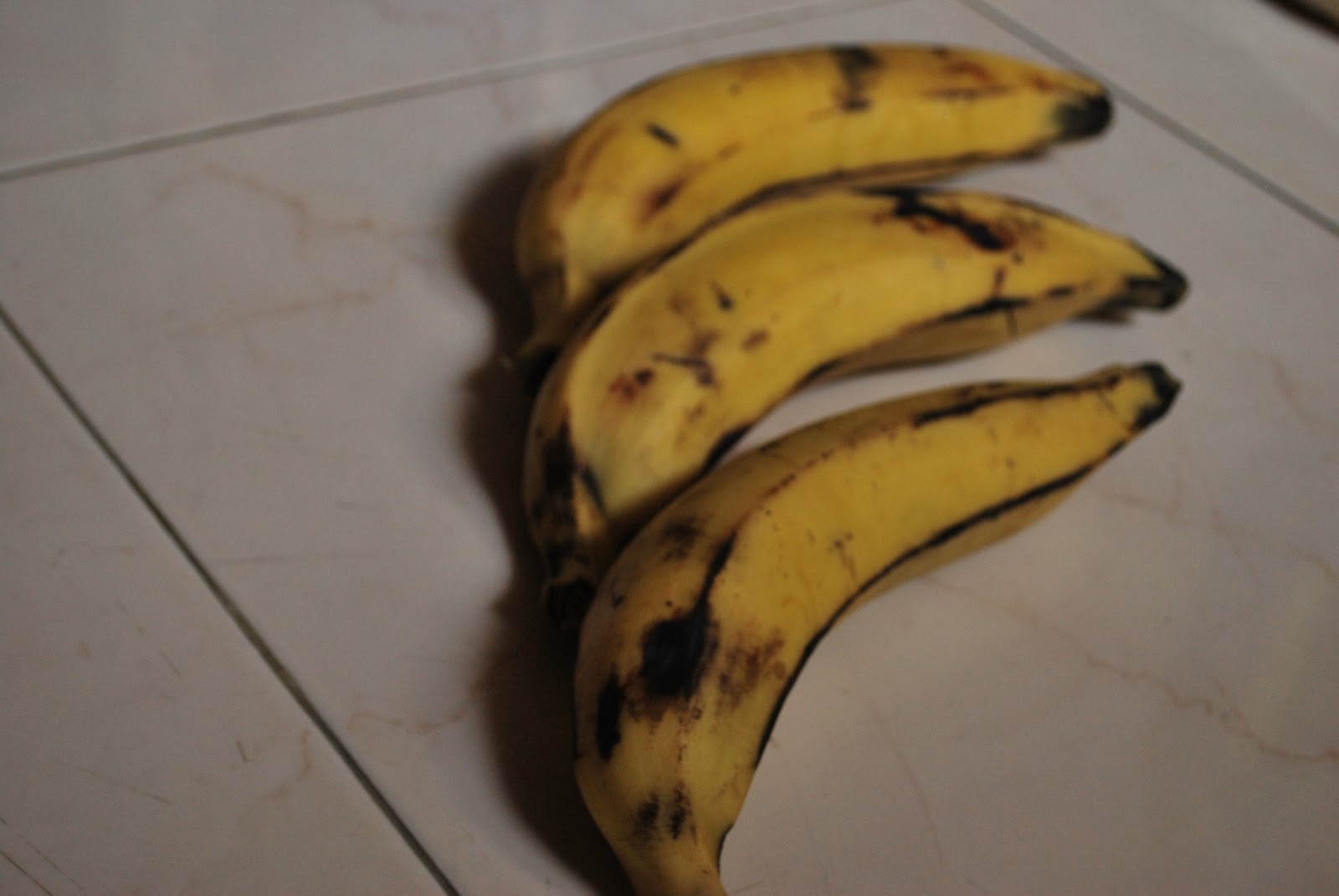
Pras had bought some Nenthram Pazham yesterday and they are like huge. I'm sure they won't get over any time soon and to ensure that they don't end up in the dust bin, I decided to make Pazham Pori. These are from the banana family and have a bit of bite in them. Peeling off their skin requires a little effort and they are a Kerala speciality.


Now that this is a Kerala speciality, you do know that it is one of Pras's favorites too. So, I thought of sending this to The Valentine's Day event hosted by Pari of Foodelicious and Cuponation.

Ingredients (serves 2 as a snack):

  1. 1 large nenthram pazham
  2. 3/4 cup maida
  3. 1 tsp sugar
  4. A pinch of salt
  5. 1/2 tsp of cinnamon/cardamom powder - using my mortar and pestle I crushed 2 cardamom and a thin stick of cinnamon
  6. 1/2 tsp turmeric powder
  7. water to make a paste
  8. Coconut oil to fry
How I made it :

  • Mix the maida, salt, sugar, turmeric powder, cardamom, cinnamon powder alongwith water to make a thickish batter - similar to bajji batter. It should be a bit thick so that it sticks to the banana and not easily slide off. That way you won't have any batter on the banana.


    • Heat oil in a kadai.
    • Slice the bananas. Don't slice them too thin. They should be about 0.5 cm thick.

    • Dip the bananas in the batter and fry
    • Let it fry on medium heat for 2 minutes on each side. Drain on paper towel.
    • Serve hot with chai. Alternately, dust with icing sugar and serve with some ice cream as dessert.

    4

    Potato and cauliflower stew

    Potato and Cauliflower aka Kaikari Stew

    Recipe by Joey
    A lightly spiced mild curry. One of my favorite breakfast items from the South of India. Reminds me of when my mom would serve cardamom flavoured coconut milk with appams.

    Prep time: 10 minutes
    Cook time: 25 minutes
    Total time: 35 minutes

    kaikari stew
    Ingredients
    • 2 Potatoes cut into 1cm cubes
    • 10 florets of cauliflower
    • 100ml thick coconut milk
    • 1 small sized onion finely chopped
    • 2 green chillies slit
    • 1tsp mustard seeds
    • 1 sprig curry leaves
    • 1/8 tsp turmeric powder
    • 1 tbsp coconut oil
    • 2 cloves
    • 1/4 tsp garam masala (optional)
    • Water as required
    • Salt to taste
    Cooking Directions
    1. In a biggish vessel, heat water with turmeric powder and put in the cauliflower florets. Boil for about 2 minutes and drain. Keep aside. This helps ensure that any worms float up.
    2. Heat oil in a pressure cooker.
    3. Add the mustard seeds and let them splutter. You could loosely place the lid over the cooker to prevent the mustard seeds from going into those hard to clean places in your kitchen.
    4. Once the spluttering has stopped, put in the curry leaves and green chillies.
    5. After a minute, put in the cloves.
    6. When you get the aroma of the cloves, put the onions and fry till they turn translucent and pink.
    7. Add the potatoes and fry for about 4-5 minutes on low.
    8. Add the cauliflower florets. Mix well.
    9. Add just enough water to cover the veggies.
    10. Add salt.
    11. Give one whistle on high.
    12. When the pressure releases, turn on heat.
    13. Pour in the coconut milk.
    14. Adjust salt.
    15. Add a little more water to get the consistency required. Stew should be a little viscous and not too watery. If you get too much water in, you could smash a few potatoes to thicken the stew.
    16. Optionally you could add 1/4 tsp garam masala
    17. Serve hot with appams. 
    Tips : 
    1. If the stew becomes watery, smash a few of the potatoes to thicken the stew
    2. You could also use other vegetable like carrots,peas and beans
    3.  
    0

    Mom-in-law's Arachavittu Sambar

    My mom-in-law makes sambar every other day and it is almost the same each time. My hubby hogs when he gets his mom's sambar. Today, I decided to make my mom-in-law's version of sambar to go with Venn Pongal. I find it a rather tedious process but it is all worth it when your husband says "The sambar is delicious, it's the best dish on the plate".

    Ingredients :
    To grind :

    1. 1/2 cup grated coconut
    2. 4-5 sambar onions
    3. 4-5 pods of garlic
    4. 1/2 tsp methi/fenugreek seeds
    5. 4 whole red chillies
    6. A large pinch of hing/asafoetida
    7. 1/2 tsp coriander powder

    For dal and veggie mix :

    1. 1/2 cup toor dal 
    2. 2 tbsp skinless masoor dal
    3. Veggies - I used 2 carrots cut into bite sized pieces and 2 brinjals quartered. You could use ladies finger, white pumpkin or drumstick too
    4. 1 potato (optional)
    5. 1 medium onion chopped
    6. 1 largish country tomato chopped
    7. 1/2 tsp turmeric powder
    8. 1 tsp coconut oil
    9. 1/2 tsp mustard seeds
    10. 1 sprig curry leaves
    11. 2 slit green chillies
    12. Salt to taste
    13. Chopped coriander to garnish

    How I made it :

    1. Dry roast coconut, small sambar onion, garlic, methi seeds, whole red chillies, cumin seeds and hing. Add coriander seeds if you have. Else, add coriander powder in the end. This would take about 8 to 10 minutes with constant stirring to get a dark golden brown color on the coconut. 
    2. Once the mixture cools, grind with enough water
    3. Pressure cook the dal with turmeric for about 15 minutes on low flame.
    4. In another pan, heat coconut oil.
    5. Add mustard seeds and let them splutter.
    6. Add curry leaves and split green chillies.
    7. Add finely chopped onion.
    8. When onion is  pink, add vegetables of your choice. I added carrot and brinjal.
    9. When the veggies are half cooked, add chopped tomato.
    10. Adjust salt and add the ground mixture. 
    11. Add this to the dal and give one whistle on high.
    12. When pressure releases, add chopped coriander.
    13. Serve with rice or chapati or idli or dosa.
    I served mine with Khara Pongal.


    0

    Dal payasam anyone??

    My parents-in-law were very upset to know that Pras and I wont be visiting them for Onam. Hence, my mother-in-law quickly got down to making some dal payasam for us. I thought that it would be a very tedious task but she made it look very simple. Yet, I think I shall take the shortcut of using coconut milk from a tetra pak rather than extract it myself ;)

    Here goes the recipe[this will also help as a reminder for me]
    Ingredients
    1. Coconut milk extracted from one coconut - don't mix the first and second pressing
    2. yellow mung dal - 1 cup boiled
    3. Jaggery - 250gms
    4. ghee - 1 tbsp
    5. cashew nuts - a few for garnishing
    6. elaichi - a few for garnishing

    Method:
    1. Boil the jaggery in a little water
    2. Pour the second pressing coconut milk and jaggery into the dal and allow it to boil for a while.
    3. Fry cashewnuts and elaichi in ghee.
    4. Add the first pressing coconut milk, ghee, elaichi and cashewnuts. Do not let it boil.

    For extracting coconut milk, boil a little water. Grate a coconut. Add a tiny bit of hot water to the coconut and squeeze the coconut bit by bit, extracting the coconut milk. This is the first pressing.
    Add a little more water to the squeezed, grated coconut and squeeze again to get the second pressing coconut milk.
    0